Mixing Hair Bundle Lengths: How to Plan Layers, Fullness and a Natural Finish
By Icon Hair · Updated 6 October 2026
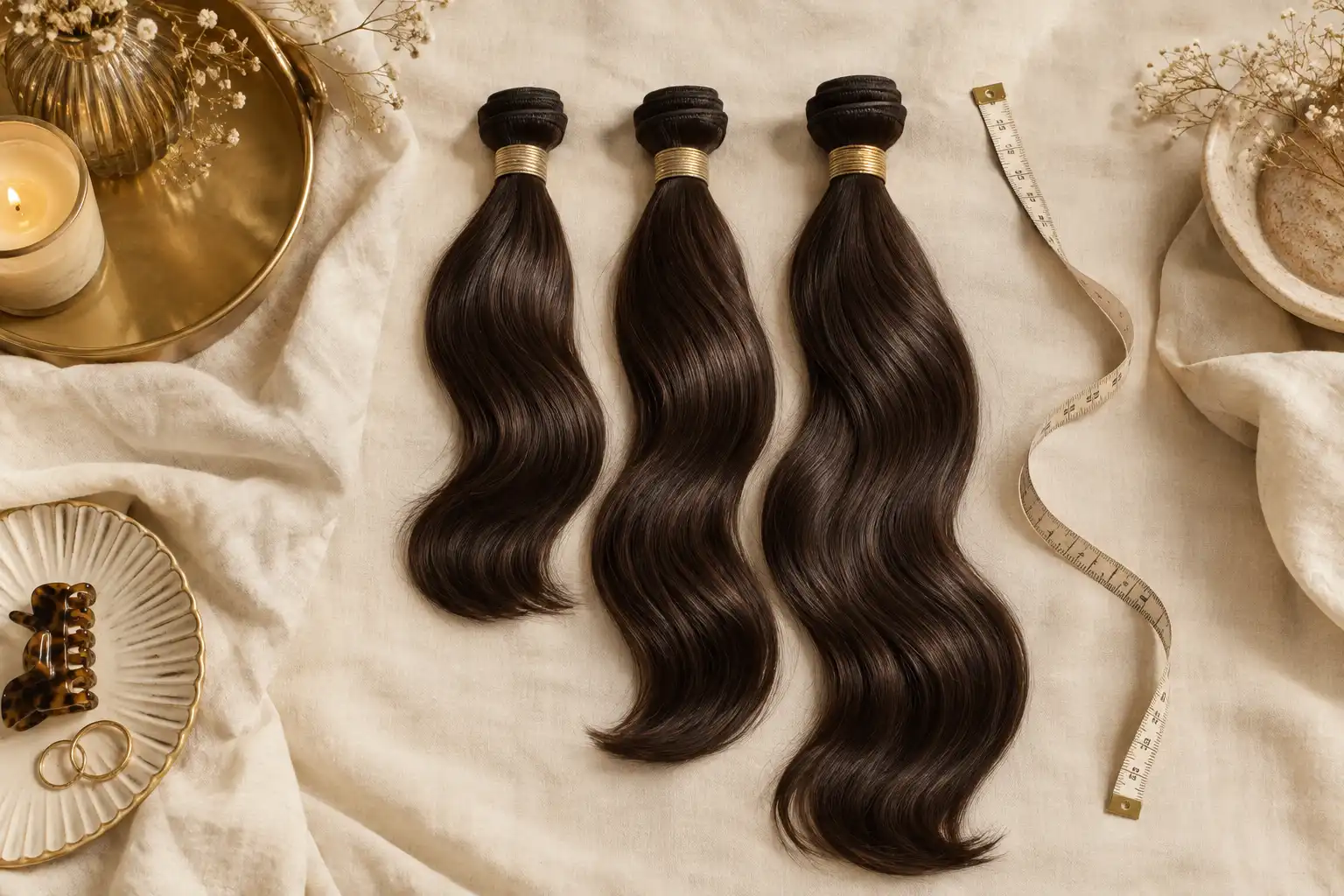
Mixing hair bundle lengths can help create a layered look, but buying three different lengths does not automatically produce a balanced hairstyle. The finished shape depends on where each weft sits, the texture of the hair, the amount of weight used and the final cut. A useful order starts with a picture of the silhouette you want, rather than a popular bundle combination copied from somebody else’s install.
This guide explains how to discuss length combinations with your stylist and compare Vietnamese hair bundles without confusing length with fullness. The examples are planning ideas, not fixed recipes for every head size or installation method.
Understand stated length and finished length
The number on a bundle describes a product measurement. It does not promise that the ends will fall at exactly the same point on every wearer. Your height, torso length, placement of the wefts and the way the hair is styled all affect where the finished hair appears to end. Ask the supplier how the length is measured, especially when comparing wavy and curly textures.
A wave or curl takes up some of the strand’s length in its shape, so its resting appearance can be shorter than the same strand when extended. If your goal is hair that reaches a particular point on your back, show your stylist that position and discuss the desired dry, styled result. Leave room for trimming and blending instead of ordering to the last possible inch.
When matching lengths make sense
Using matching bundle lengths can be a useful starting point when you want substantial fullness towards the bottom of the style. More of the supplied hair has the potential to reach the longer part of the finished shape. It can also give your stylist material to work with when cutting a blunt outline or shaping a long, polished finish.
However, matching labels do not create a perfectly level haircut by themselves. A weft placed higher on the head starts from a different point than one positioned near the nape. Your stylist still needs to plan placement and cut the final outline. Think of matching lengths as an ordering choice that supports a goal, rather than a substitute for finishing work.
When graduated lengths are worth considering
A shorter, middle and longer bundle can provide material for a layered style, particularly when the brief is movement through the mid-lengths rather than a heavy bottom edge. For example, a stylist might discuss an 18, 20 and 22 inch combination when those lengths are available. The numbers are an illustration of a gradual progression, not a recommendation for a particular person.
The trade-off is that the shorter hair does not contribute equally to fullness at the longest endpoint. If a very dense lower section is essential, a graduated combination may need a different balance of weights or more of the longest length. Tell the stylist whether you care more about airy movement or a substantial perimeter so the order supports the intended result.
Think in grams as well as bundles
Bundle count alone can hide important differences. Compare the stated weight of each item and the total weight in the proposed order. Three products labelled as bundles are not necessarily equivalent if their weights or construction differ. The amount your installer recommends should take account of the design, the available attachment area and the feel you want.
At a comparable total weight and strand thickness, longer hair spreads that weight over more length. This is one reason a long style can require a different density plan from a shorter style. It does not mean you should add hair until the ends look full in a photograph. Comfortable placement and a suitable installation remain part of the decision.
Compare the fullness of the ends
Length and drawn grade describe different aspects of the product. A label such as double drawn usually relates to the distribution of strand lengths, but the terminology is not a precise universal measurement. Ask for clear product information and photographs of the ends rather than treating a grade name as a guarantee of a particular silhouette.
Our guide to what double-drawn hair means is a useful companion when comparing options. Keep the desired finish in view: softer, tapered ends and a very full blunt edge require different planning, even if the longest measurement on the packaging is identical.
Keep texture and colour consistent
A coherent length combination can still look mismatched if the bundles have noticeably different textures or undertones. Try to compare products within the same range and check the exact texture description. Do not assume that two products called wavy will form the same pattern or respond identically to styling.
If you are comparing Vietnamese raw hair, ask about the variation to expect between pieces and what the supplier can match. If you prefer a particular finish from the Remy hair collection, confirm the shade and texture across the full order. Product-specific answers are more useful than broad assumptions about a category.
Plan the closure as part of the haircut
For a wig or covered install, the closure hair begins at a different point from the lower wefts. Its length affects the top layers, the front outline and the way the style blends around the face. A shorter closure can support layers in some designs, but it can also create an unwanted gap if the rest of the haircut needs long, continuous lines.
Compare the relevant hair closures and wig options with your installer before ordering. Ask for the closure length as a separate line in the specification. The required length does not have to equal the longest bundle, but it should be chosen deliberately rather than added as an afterthought.
Use a written ordering brief
Before checking out, write down the desired finished length, texture, parting position and overall outline. Add the number and weight of each bundle, the exact product range and any closure details. Send the list to the person doing the install and ask whether the combination provides enough hair for the planned finishing cut.
For example, a brief might say: soft waves, a full lower outline, face-framing layers and a centre part. That is more informative than listing three lengths with no explanation. The stylist may prefer matching lengths with a tailored cut, a graduated combination, or a different balance of pieces once the whole brief is clear.
Questions to settle before buying
- Is the target length the supplied measurement or the finished styled length?
- How much hair needs to reach the longest point?
- Are the texture, colour and weight consistent across the order?
- Will a closure or frontal need its own length specification?
- How much trimming is expected to achieve the final shape?
There is no single best bundle combination for every install. Use the bundled hair collection to compare your options, then order a combination that your stylist has connected to a clear finished shape. That approach makes the choice easier to explain, check and refine.