What Does Double-Drawn Hair Mean? A Practical Buyer’s Guide
By Icon Hair · Updated 6 October 2026
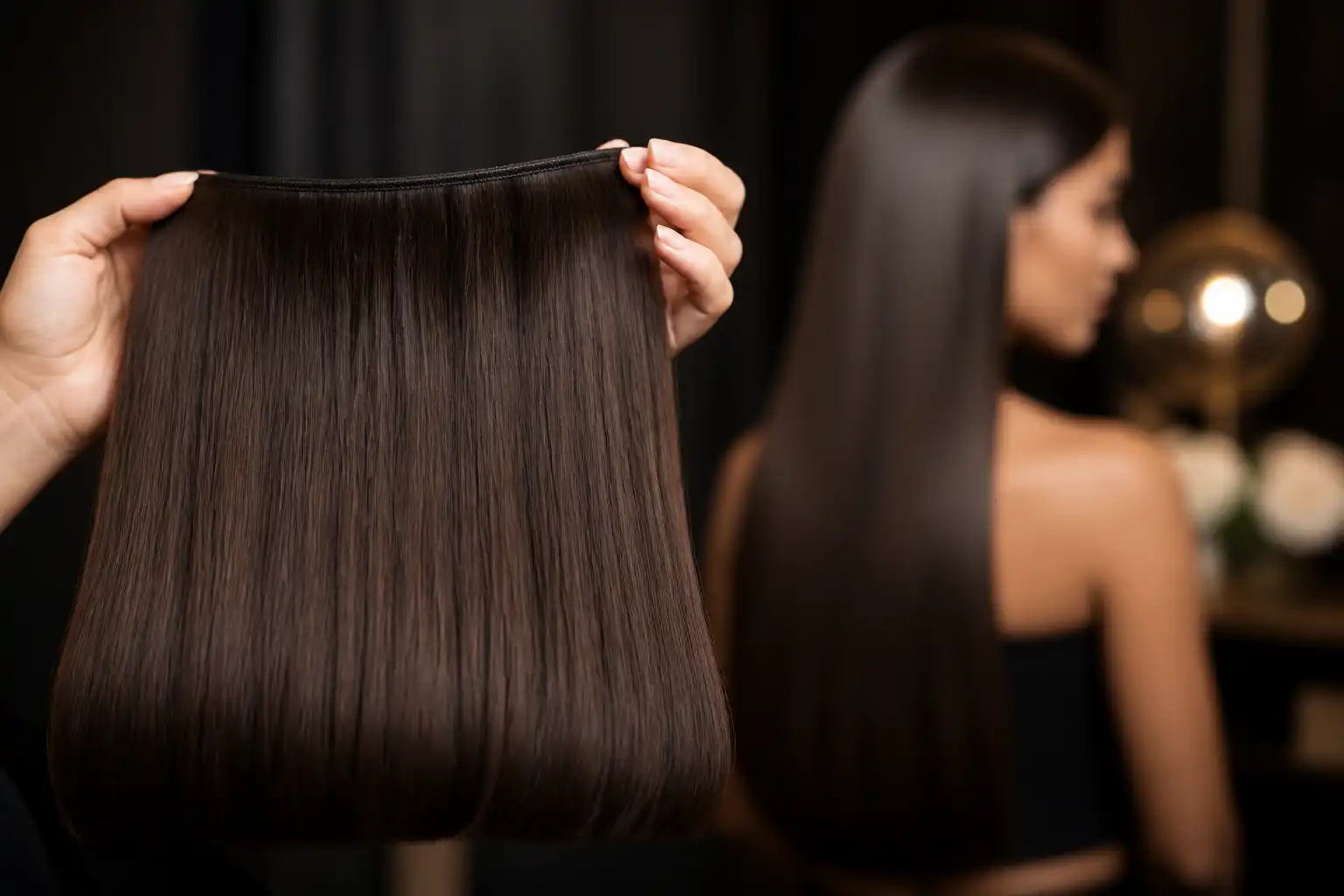
Double-drawn hair is a term buyers often see when comparing premium wefts. It describes a fuller, more even appearance through the lengths because shorter strands have been reduced so more of the hair reaches the ends.
Why the ends look fuller
In a mixed-length bundle, shorter strands naturally taper away before the ends. A double-drawn format is prepared to create greater consistency, so the finished hair can look fuller from the middle through to the tips. That can be especially noticeable in sleek, long or blunt styles.
What double-drawn does not mean
Double-drawn does not remove the need for care, and it does not automatically tell you which texture, density or install is right for you. You should still check the listed format, length, shade and texture before ordering. A fuller end profile is only one part of the decision.
Compare the natural straight double-drawn Remy weft or the natural curly double-drawn Remy weft to see how the finish changes with texture.
Who may prefer double-drawn hair?
- Buyers who want fuller-looking ends in a long or sleek style.
- Clients who prefer a polished finish with less visible tapering.
- Salons that want an easy-to-explain, repeatable premium option.
- Anyone prepared to protect the ends with gentle brushing, conditioning and sensible heat use.
How to compare before buying
Compare like with like: the same length, texture and colour family. Ask how the hair is measured, what weight is included and whether your stylist recommends a weft, bundle, closure or frontal for the install.
The Remy Hair collection is a useful place to compare polished options, while the cost and value guide can help you think about longevity and styling flexibility.
Double-drawn hair can be a strong choice when fuller ends matter, but the best result still comes from matching the product to your install and maintaining it consistently.