The Complete Guide to Matching Hair Extension Colour at Home
By Icon Hair · Updated 6 October 2026
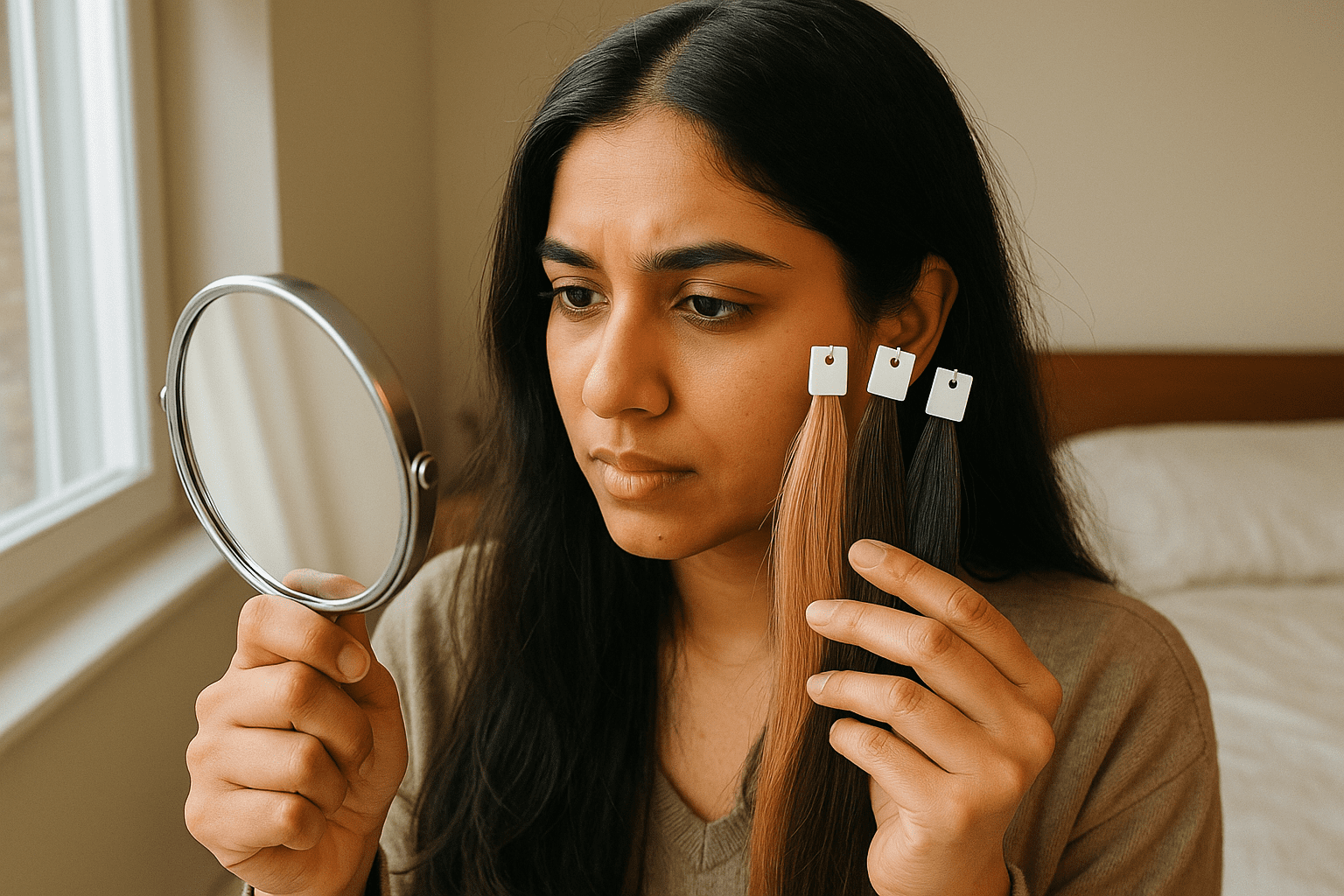
Colour matching is where premium extensions either look effortless or immediately look expensive in the wrong way.
Most at-home mistakes happen because shoppers compare shades under the wrong light, focus only on roots or choose a colour they wish they had instead of the colour they actually wear most days.
The best colour match is not the exact root shade. It is the shade that disappears into your mid-lengths and ends.
Quick Answer
Match your extensions to the mid-lengths and ends of your hair in natural daylight. That gives the most believable blend because extensions live through the body of the hair, not only at the root.
After that, judge undertone before depth. Warm, neutral and cool mismatches are usually more obvious than being half a shade lighter or darker.
Key Takeaways
- Always compare colour in daylight before buying.
- Match to the part of your hair the extensions will blend into, not the regrowth.
- Undertone matters as much as depth.
- If you are between shades, slightly lighter is often easier to customise than too dark.
Why matching roots leads people astray
Roots are often cooler, darker or simply different because of regrowth, salon history or natural depth. Extensions need to blend through the visible body of your style, so matching only the root can leave the lengths looking blocky.
Instead, assess the hair from ear level downward. That is where the blend has to work in daylight, flash photography and movement.
Read undertone before you read level
Two brunettes can be the same level and still clash if one reads ash and the other reads golden. The same applies to blondes, coppers and balayage shades.
A simple test is to hold candidate shades against the ends of your hair near a window. If one shade looks flat while another melts in, the difference is usually undertone rather than darkness.
- Warm hair reads golden, honey, caramel or copper.
- Cool hair reads ash, beige, mushroom or icy.
- Neutral hair can move either way without looking obviously wrong.
- Mixed-dimension hair often needs the shade that matches the dominant tone, not every highlight.
What to do when your colour is dimensional
If your hair has balayage, highlights or a lived-in salon finish, aim to match the overall blend rather than every stripe. Hair with dimension looks believable because tones shift through the lengths, so your extension choice should support that movement instead of trying to mimic each individual ribbon.
If you are choosing between two shades, ask which one will still look good when your hair is not freshly styled. That is the smarter long-term match.
Do a real-life test, not a perfect-light test
Check the shade in daylight, indoor light and the phone camera you use most often. Some matches pass the mirror test but fail the content test because they read too warm, too solid or too dark on camera.
This is especially important if you plan to promote the hair on social. A believable blend is one that survives movement, shadow and ordinary British daylight.
Shop the Right Hair for This Goal
If you are acting on this advice now, start with Remy Hair, Bundled Hair. Those collections are the most relevant routes for this specific result, and they make it easier to choose hair that behaves the way you need it to.
Frequently Asked Questions
Should extensions match my roots or my ends?
Match the mid-lengths and ends first. That is where the extensions visually sit and where the blend is judged.
Can I choose a slightly lighter shade?
Yes, in many cases. Slightly lighter hair is often easier to tone or blend than extensions that are obviously too dark.
What if my hair changes between salon visits?
Buy for the colour you wear most often, not the one you have for three days after a fresh appointment.
Read Next
If you want to go deeper, continue with How to Choose the Right Hair Extension Length for Your Face Shape, Are Human Hair Extensions Worth It? Cost vs Value. That keeps the buying path connected to the education instead of sending the reader back to generic search results.
Final Word
When colour matching feels difficult, slow down and judge the hair in daylight. Most bad decisions happen because people rush the one step that defines the final blend.