What to Avoid When Washing Hair Extensions
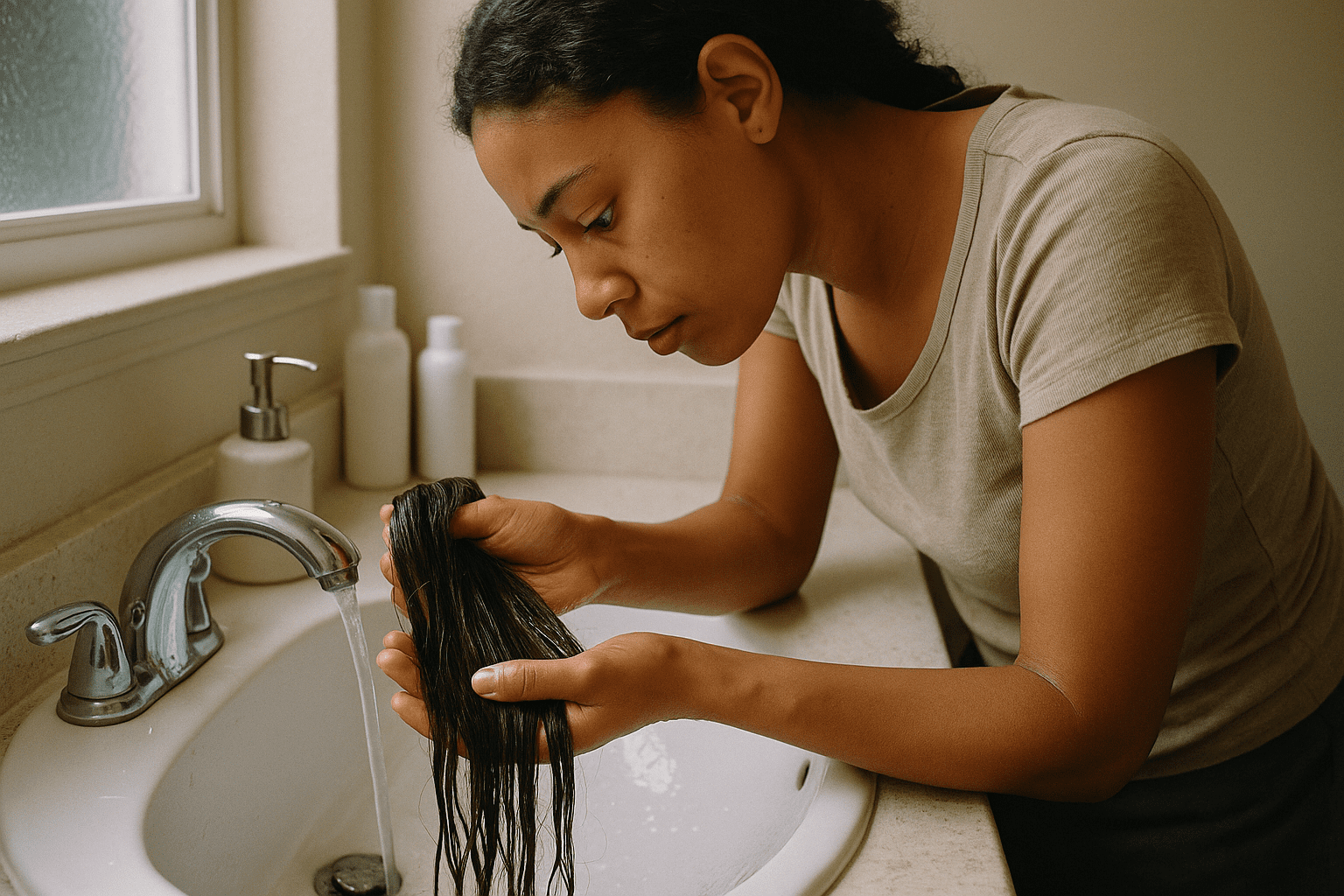
Most extension damage during washing does not come from the water itself. It comes from panic habits: rubbing too hard, using products in the wrong places and handling the hair roughly while it is most vulnerable.
A bad wash can undo a week of careful styling. A good wash resets the hair without making you pay for it later with knots and dryness.
The worst wash-day mistakes happen when people clean extensions like scalp hair instead of treating them like premium lengths.
Quick Answer
Avoid hot water, rough scrubbing, heavy conditioner near the attachments, aggressive towel drying and brushing soaked tangled hair without patience. Those habits create the dryness and matting people often blame on the hair itself.
Wash extensions with calm, downward motions and enough detangling beforehand that the hair is already under control before water touches it.
Key Takeaways
- Detangle before the wash, not after the knot has set.
- Keep cleansing controlled and downward.
- Do not load the attachment area with rich product.
- The way you dry the hair matters almost as much as the wash itself.
Stop turning the wash into a tangle session
The fastest route to post-wash frustration is scrubbing the hair into itself. Extensions should be cleansed in the direction the hair naturally falls. Once the hair starts bunching, you create a knot you then have to drag out later.
This is especially damaging when the hair is long or when you have been wearing it loose for days without fully detangling first.
Be careful where products go
Shampoo belongs where build-up lives. Conditioner belongs where dryness lives. Confusing those zones is why extensions often feel either dry and rough or heavy and slippery.
Keeping heavier formulas away from the attachment area usually makes the hair easier to dry, easier to style and less likely to slip or matt.
- Avoid rough scalp-level scrubbing if you are wearing installed extensions.
- Avoid rich masks too close to tapes, bonds or stitched areas.
- Avoid clarifying every wash unless product build-up is obvious.
- Avoid leaving residue in the hair because incomplete rinsing creates dullness fast.
Drying mistakes are often the real problem
People often blame the wash when the real damage happens afterwards. Twisting the hair into a towel, sleeping on damp lengths or blasting sections randomly with high heat can leave the hair feeling rough before the next day begins.
Blot, separate and dry with intent. That preserves the cuticle far better than a chaotic, rushed finish.
Shop the Right Hair for This Goal
If you are acting on this advice now, start with Raw Hair, Remy Hair. Those collections are the most relevant routes for this specific result, and they make it easier to choose hair that behaves the way you need it to.
Frequently Asked Questions
Can I air-dry extensions?
Often yes, but only if the hair is detangled, separated properly and not left damp in a tangled state for hours.
Should I wash extensions in very hot water to make them feel clean?
No. Hot water can dry the hair faster and encourages unnecessary stress during the wash.
Why do my extensions feel worse after washing?
Usually because of rough handling, residue, too much heat afterwards or poor detangling before the wash started.
Read Next
If you want to go deeper, continue with Best Haircare Routine for Human Hair Extensions, How to Prevent Shedding and Dry Ends in Extensions. That keeps the buying path connected to the education instead of sending the reader back to generic search results.
Final Word
A calmer wash almost always produces better-looking hair. Slow the process down and most of the usual problems become far easier to prevent.