Best Brushes and Tools for Extension Care
By Icon Hair · Updated 6 October 2026
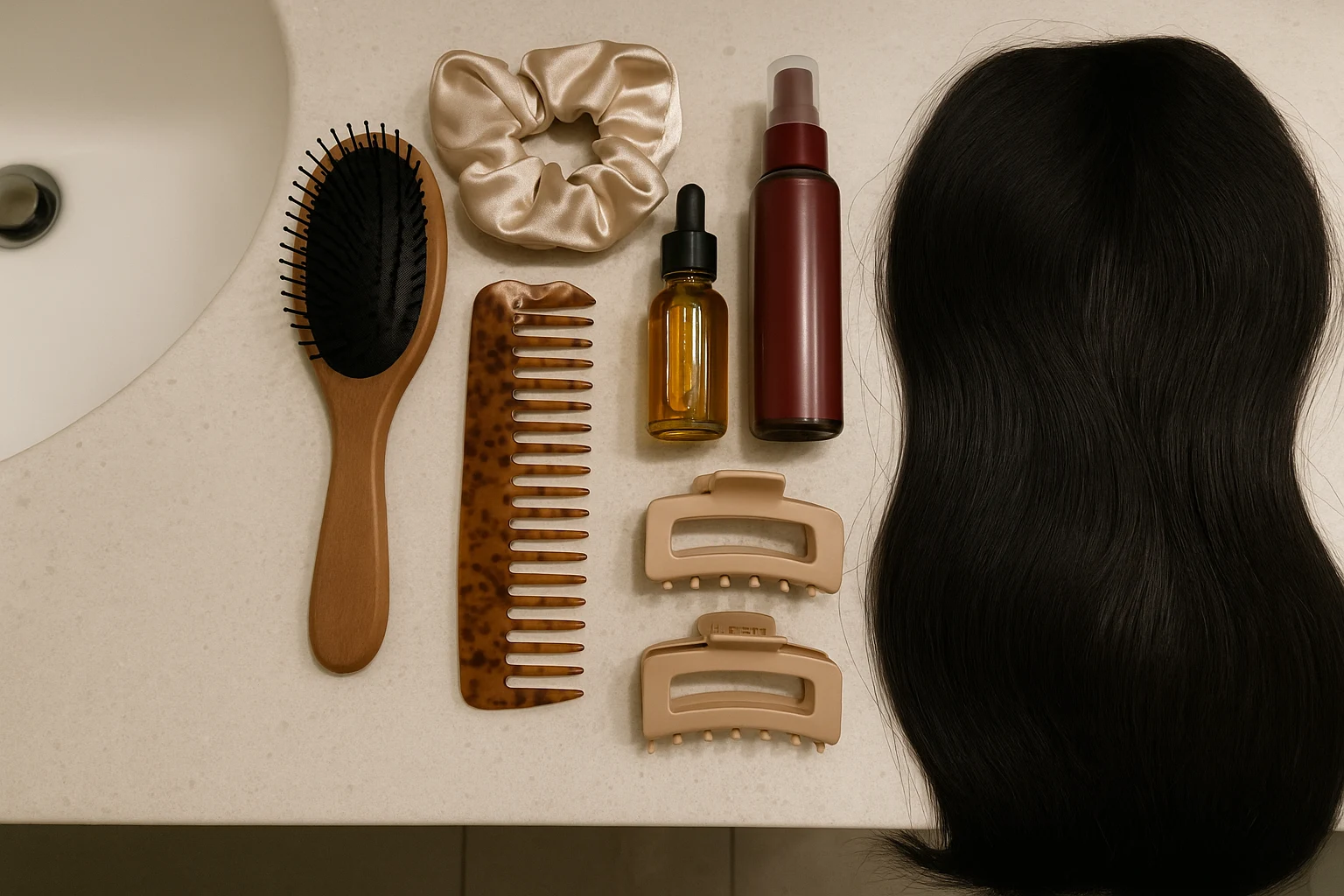
Good extension care starts with the tools you use every day. If the brush is too harsh or the tool choice is wrong, even high-quality hair will start to show the strain.
The best toolkit is not the biggest. It is the one that lets you detangle, style and store the hair with the least amount of stress.
The right brush protects the hair before you ever reach for a treatment.
Quick Answer
Start with a gentle extension-safe brush, a wide-tooth comb for careful detangling, soft hair ties or scrunchies and heat tools you can control precisely. These basics cover most of what extension hair needs.
The common mistake is using the same aggressive tools you might use on your scalp hair when the extensions actually need more patience and less drag.
Key Takeaways
- Use tools that reduce drag and friction.
- The gentlest tool is often the most effective one over time.
- Controlled heat tools are safer than aggressive ones.
- Storage tools matter if you wear removable hair.
The core detangling tools
A soft extension brush and a wide-tooth comb do most of the heavy lifting. The brush helps with everyday smoothing, while the comb is useful when you need slower, more deliberate detangling.
Using both well is usually better than trying to make one tool do everything.
- Choose a brush that glides rather than snags.
- Keep a wide-tooth comb for wash day and delicate areas.
- Use your fingers first on tougher knots to reduce breakage.
- Clean your tools regularly so product and shed hair do not transfer back into the lengths.
Styling tools worth keeping
You do not need every hot tool on the market. A reliable dryer, one well-controlled iron or curler and clips for neat sectioning are usually enough for most routines.
Good tools help because they create the finish faster and with fewer repeated passes. That is a care advantage, not just a styling convenience.
Small accessories that make a big difference
Silk scrunchies, sectioning clips, a proper hanger for removable hair and a clean storage bag are not exciting purchases, but they prevent friction and preserve shape surprisingly well.
These are the kinds of tools people overlook until the hair starts feeling harder to manage. By then the damage has already begun.
Shop the Right Hair for This Goal
If you are acting on this advice now, start with Remy Hair, Raw Hair. Those collections are the most relevant routes for this specific result, and they make it easier to choose hair that behaves the way you need it to.
Frequently Asked Questions
Can I use a regular paddle brush on extensions?
Sometimes, but only if it is gentle. Many standard brushes create more tension and drag than extension hair needs.
Is a wide-tooth comb enough on its own?
It helps, but most people benefit from both a comb and an extension-safe brush for different stages of care.
Do expensive tools always perform better?
Not automatically. Precision, temperature control and gentle use matter more than prestige branding.
Read Next
If you want to go deeper, continue with How to Prevent Shedding and Dry Ends in Extensions, Best Haircare Routine for Human Hair Extensions. That keeps the buying path connected to the education instead of sending the reader back to generic search results.
Final Word
If your tools are fighting the hair, the rest of your routine has to work twice as hard. Upgrade the basics first.